


Welcome to the podcast Organized Money. You can listen to today’s episode on Apple on Spotify, or wherever you get your podcasts.
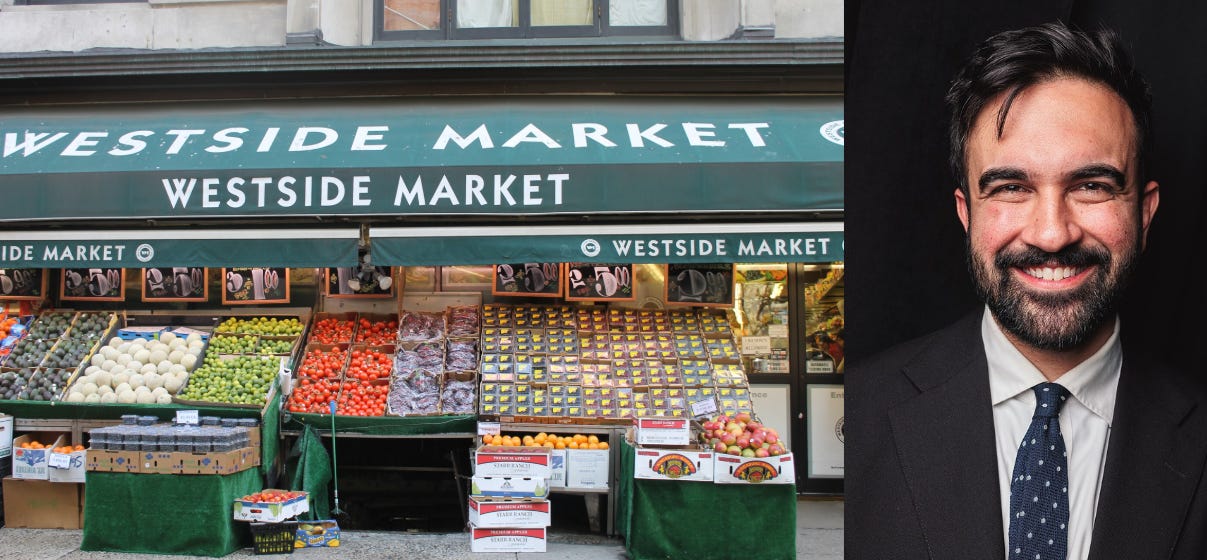
Of all New York Mayor Zohran Mamdani’s campaign promises, his plan for government-subsidized grocery stores has resulted in the strongest, and sometimes strangest, ire. Critics have called it bad policy, bad business, and even the tipping point on our slide towards Venezuelan socialist oblivion, oh no!
Today on the show, we have one of the people who consulted with the mayor on his grocery plan: Errol Schweizer, grocery expert, host of the Grocery Nerds podcast, and writer at the The Checkout Grocery Update newsletter. Errol argues that far from an untested policy, many Americans already love government-run grocery stores; they just don’t realize it. Errol also dismantles much of the criticism the pilot program has received as we discuss the logistics of scale and how the private sector will actually run the stores. Among many things, we get into how the subsidies will work, grocery policy at large, and get a very frank assessment of what to make of the criticism coming from think tanks like the Manhattan Institute.
Listen via Apple or Spotify, or wherever you get your podcasts.
We also provide transcripts and video for every episode. Here is last week’s episode.
Thank you so much for listening. If there’s a monopoly you’d like us to explore this year, or if you have anything else to tell us, please let us know by leaving a comment or by responding directly to this email.
I’m a huge fan of your work, particularly BIG. However, I’m struggling to reconcile your apparent support for NYC’s subsidised grocery stores with my understanding of your broader views on monopoly power and how it should be constrained.
I get the “new channel of trade” point from the podcast, but I’m struggling to see how the current policy creates one in a real sense. The practical argument seems to be that private operators already have the supply chains, wholesale contracts and buying infrastructure needed to stand the stores up quickly. But isn’t that also the problem?
To me, it sounds less like a new channel of trade and more like a subsidised checkout attached to the existing food supply chain.
Without something concrete that changes upstream buying power or supply-chain structure, why wouldn’t this mainly create a government-backed customer through which concentrated upstream actors can keep extracting rents, with the public effectively absorbing the cost? Am I missing something?