


Welcome to the podcast Organized Money. You can listen to today’s episode on Apple on Spotify, or wherever you get your podcasts.
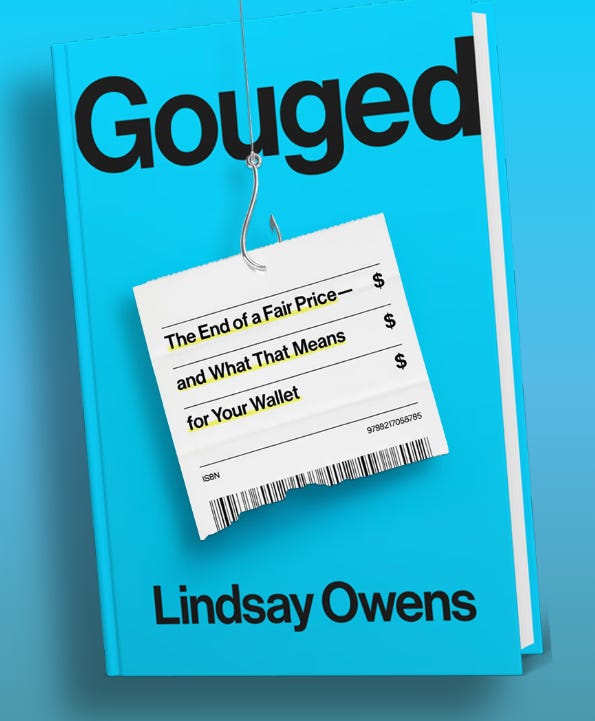
The journalist Lindsay Owens is on Walmart's bad side. After she uncovered several deeply creepy patents designed to surveille and de-anonymize their customers, the company has firmly denied they would ever, ever implement such terrible things. No one really believed them. Today on the show, Lindsay explains Walmart's surveillance patents, and more stories from her book Gouged, about the future of pricing, where algorithmically determined personalized gouging could run rampant without regulatory intervention. We also discuss the impact of Lindsay's work, her congressional testimony, and the important role prices play in democracy.
Listen via Apple or Spotify, or wherever you get your podcasts.
We also provide transcripts and video for every episode. Here is last week’s episode. And here’s a link to this week’s transcript.
Thank you so much for listening. If there’s a monopoly you’d like us to explore this year, or if you have anything else to tell us, please let us know by leaving a comment or by responding directly to this email.
A great episode, a bit of a funny listen as a patent practitioner.
“Is there just a lab of people at Wal-Mart that gets paid to invent things that they’re never going to use?” The answer is undoubtedly “yes.” Wal-Mart is infamous for using R&D to create “patent thickets” that they can use to kneecap small-to-midsize competitors. The now-archaic “Nine Nos of Patent Licensing” promulgated at the DOJ in the 1970 used to be designed to stop this kind of behavior, but those were discarded in the 1980s for expected reasons.
They might also be using the technology, but there are certainly independent financial motivators for patenting everything you can get engineers brainstorm and seeing what sticks.
We count shoplifting crime, but rarely count the harm when a company uses our personal data to charge us more. Lindsay Owens’ interview showed how Walmart’s surveillance pricing patents take money from shoppers without their knowledge. That's shoplifting in reverse. Thank you for the great work!